Sandalwood in Traditional Chinese Incense Culture: A Complete Guide
Introduction: Why Sandalwood Stands Core in Chinese Incense Culture
When talking about the most classic and widely loved material in traditional Chinese incense culture, sandalwood always takes the top spot. For thousands of years, sandalwood has been more than just a fragrant wood for making incense sticks and coils. It is deeply woven into ancient Chinese daily life, traditional rituals, spiritual practices, and home ambiance building. Known by various ancient Chinese names like Zhantan, Zhantán, and Zhāntánxiāng in historical records, sandalwood has been cherished by scholars, royal families, and ordinary families across dynasties. Even today, sandalwood remains one of the best natural incense choices for home relaxation, meditation, and creating a peaceful cozy home vibe.
Ancient Historical Records: The Early Names and Origins of Sandalwood
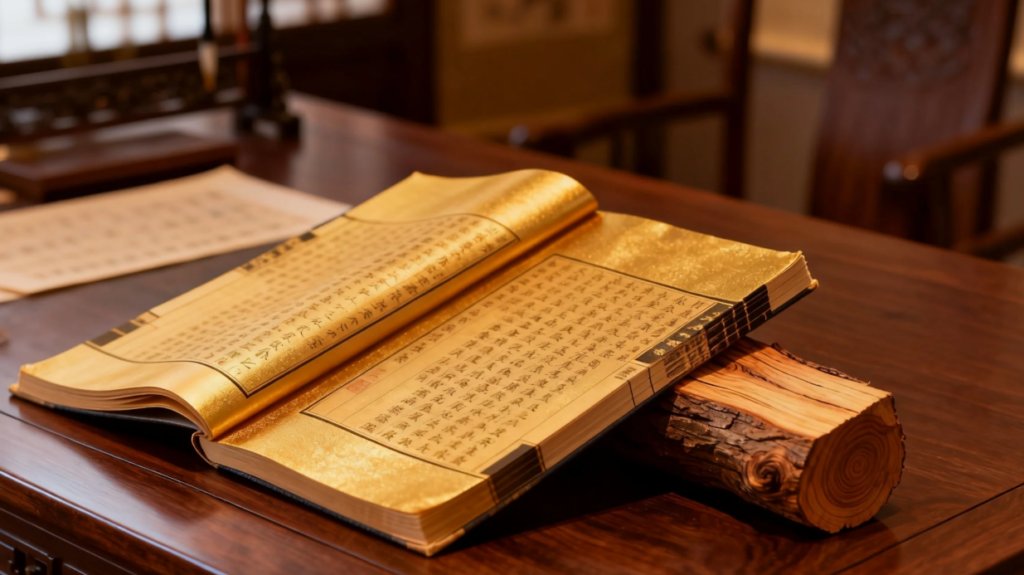
Sandalwood has been documented in Chinese ancient books and Buddhist scriptures for a very long time. In the Tang Dynasty, renowned Buddhist scripture translator Xuan Ying clearly recorded sandalwood’s early aliases and basic traits in his classic workYinyi of All Scriptures. He noted that Zhādànna, also called Zhāntánna, was a precious fragrant wood imported from foreign lands, categorized into three main original types: red sandalwood, white sandalwood, and purple sandalwood. Later in the Ming Dynasty, the famous medical and botanical expert Li Shizhen officially adopted the simple and unified names “Sandalwood” and “White Sandalwood” in Bencao Gangmu, laying a clear naming standard for later generations to identify and use this precious fragrant material.
Botanical Traits: Slow-Growing Semi-Parasitic Precious Evergreen Tree
Sandalwood belongs to the Santalaceae family and the Santalum genus, a unique evergreen tree with very strict growth requirements. A mature sandalwood tree can grow up to ten meters high, with spear-shaped leaves growing opposite each other and special pod-like flowers. Its flowers change color naturally during the blooming process, starting bright yellow and gradually turning deep blood-red. The spherical fruit is about the size of a broad bean, turning black and juicy when fully ripe, with a hard core covered with three obvious ridges on the surface.
What makes sandalwood extremely rare and valuable is its special growth habit. Sandalwood is one of the slowest-growing tree species in the world, requiring decades to fully mature. More importantly, it is a delicate semi-parasitic plant. Its roots can only absorb a small amount of nutrients from the soil, and it must rely on attaching its special root suckers to the roots of host plants such as Indian rosewood and flame trees. Without suitable host plants, sandalwood saplings cannot survive. Even with hosts, the companion trees cannot grow too tall or too vigorous, otherwise sandalwood will fail to thrive and wither away. This special growth feature is the key reason why genuine natural sandalwood has always been scarce and precious.
Clear Distinction: Real Sandalwood vs Furniture Wood With the Same Name
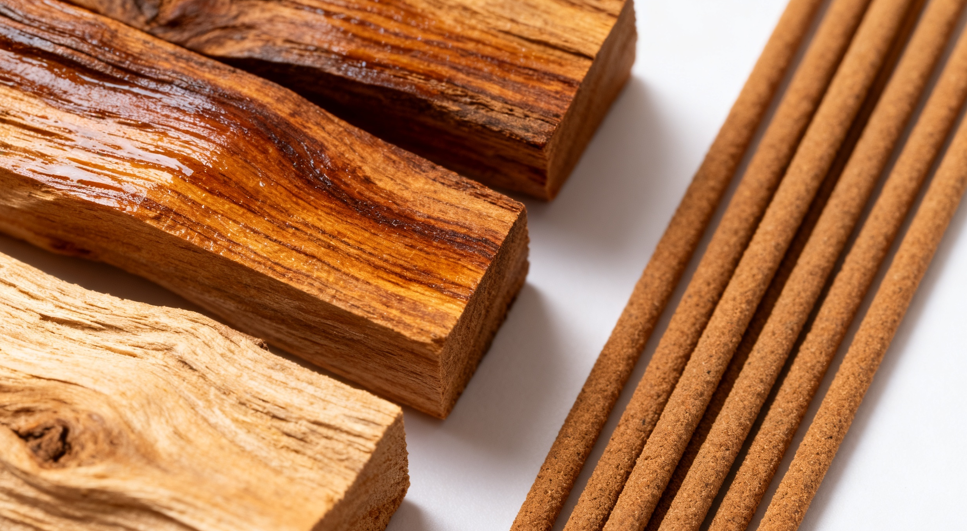
Many beginners easily confuse real sandalwood with other wooden materials used for classical Chinese furniture, and this misunderstanding needs to be clarified clearly. The sandalwood used for traditional Chinese incense making belongs exclusively to the Santalum genus in the Santalaceae family. It is completely different from furniture woods with similar names, including Sandalwood Rosewood, Dalbergia odorifera, Hainan Sandalwood, and Green Sandalwood.
Each of these furniture materials comes from totally different plant families and genera. Sandalwood Rosewood belongs to the legume family’s Pterocarpus genus. Dalbergia odorifera and Hainan Sandalwood belong to the Dalbergia genus. Green Sandalwood even belongs to the Ulmaceae family. These woods are perfect for making high-grade furniture and crafts, but they are not the genuine sandalwood used for natural incense and spiritual rituals.
Material Texture, Oil Content and Scent Aging Rules
Genuine sandalwood has excellent texture and stable physical properties. New sandalwood usually shows a yellowish-brown or dark brown color, while aged sandalwood turns slightly darker with time. The wood body is hard, fine-grained and super smooth to the touch, with an air-dried density between 0.87 and 0.97 grams per cubic centimeter. Its cross-section texture is straight or slightly wavy, with clear and natural growth rings.
All parts of the sandalwood tree, including roots, branches and fruits, contain natural aromatic oil. However, the core wood near the tree center and roots has the highest oil content and the best fragrance quality. Newly cut sandalwood usually carries a slight pungent and fishy raw scent, so it cannot be used for incense immediately. It needs long-term natural aging and resting to let the volatile raw smell fade away, leaving only a soft, calm and mellow aroma. Sandalwood stored for decades or hundreds of years is always regarded as top-grade, with an extremely smooth, long-lasting and comforting scent.
Song Dynasty Records: Ancient Origins and Different Grades of Sandalwood
In the Song Dynasty, scholar Zhao Rushi detailed sandalwood’s producing areas, classifications and quality grades in his famous work Zhu Fan Zhi. He recorded that high-quality sandalwood mainly came from two ancient regions, Dara Kan and Di Wu, which correspond to present-day Kalimantan Island and Timor Island. Locals there had a tradition of naturally drying sandalwood in the shade to retain its clear and strong fragrance.
Ancient people divided sandalwood into different types by color and quality. Yellow sandalwood, purple sandalwood and light crisp sandalwood were the most common categories, with similar basic aromatic traits. Old sandalwood with thin bark and full fragrance was ranked the highest grade, followed by medium-grade sandalwood with moderate aroma. Lower grades included point star fragrance and broken fragrance for daily use, while sandalwood roots were called fragrant heads in ancient naming customs.
Main Producing Areas & Quality Differences by Region
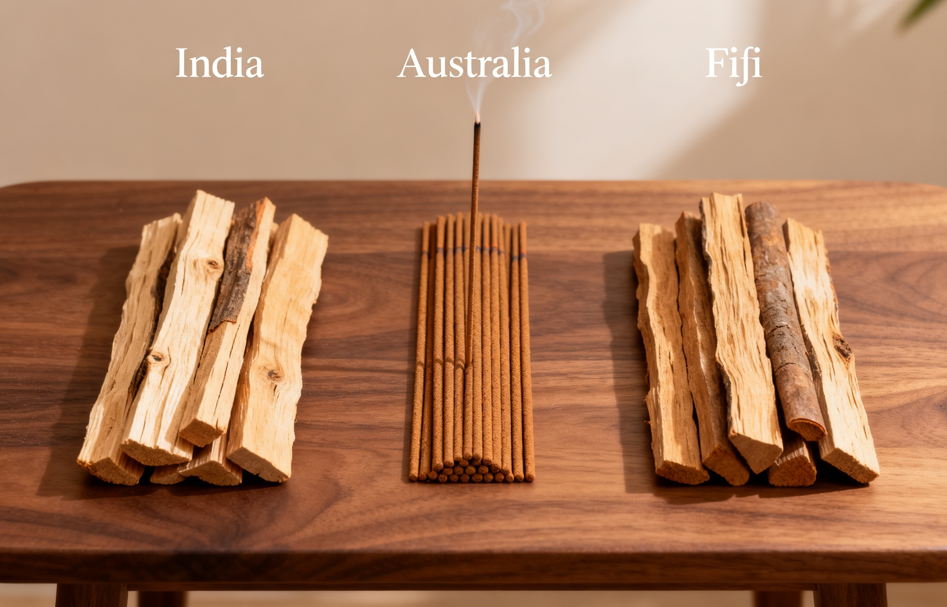
There are roughly ten main species of sandalwood plants in the world, mostly distributed in hot and humid tropical regions including eastern India, Thailand, Indonesia, Malaysia, Australia and Fiji. Among all origins, Indian Laoshan sandalwood is widely recognized as the highest quality standard. Also known as Baipi Laoshanxiang or Indian incense, it features a white base with slight yellow tones, rich natural oil, straight and thick wood shape, fine dense texture and an extremely mellow, long-lasting aroma.
Sandalwood from Australia, Indonesia and East Timor is slightly lower in overall quality compared to Indian sandalwood. Australian sandalwood is commonly called Xinshanxiang, usually thinner in shape with a lighter and weaker scent. Indonesian and Timorese sandalwood, known as Dimenxiang, often has twisted wood with many branches and knots. The South Pacific Fiji sandalwood also enjoys a good reputation for stable mild fragrance. Although China has introduced and planted sandalwood in Taiwan, Hainan and southern Yunnan, domestic output is limited, and the country still relies mainly on high-quality imported sandalwood.
Traditional Usage: Harmonious Incense Blending and Daily Incense Making
One special feature of sandalwood in traditional Chinese incense culture is its excellent harmonizing effect. When blended with other natural fragrant herbs, sandalwood can balance and enhance the overall aroma, making the scent softer and more layered. This is why sandalwood is the core material for making harmonious blended incense in ancient traditional recipes.
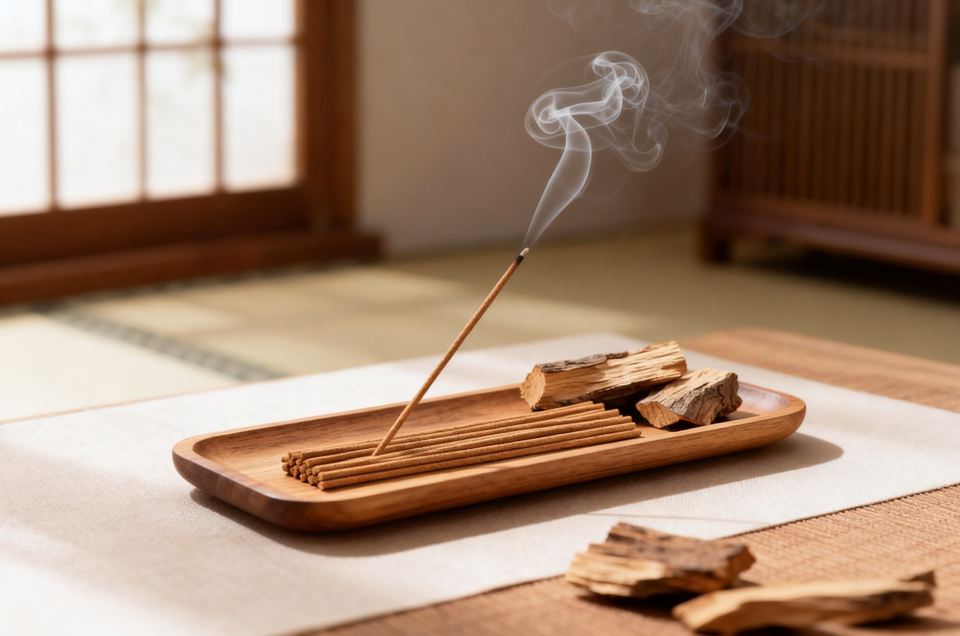
Before formal incense making, sandalwood is often processed with tea infusion and mild fire roasting to stabilize its fragrance and make the aroma gentler. Apart from blended incense, sandalwood is widely made into incense powder, incense blocks and refined sandalwood essential oil. High-quality sandalwood incense powder is perfect for making premium thread incense, coil incense, clothing fumigation and traditional sachets, bringing a natural and lasting home fragrance effect.
Cultural & Spiritual Value for Meditation and Ritual Ambiance
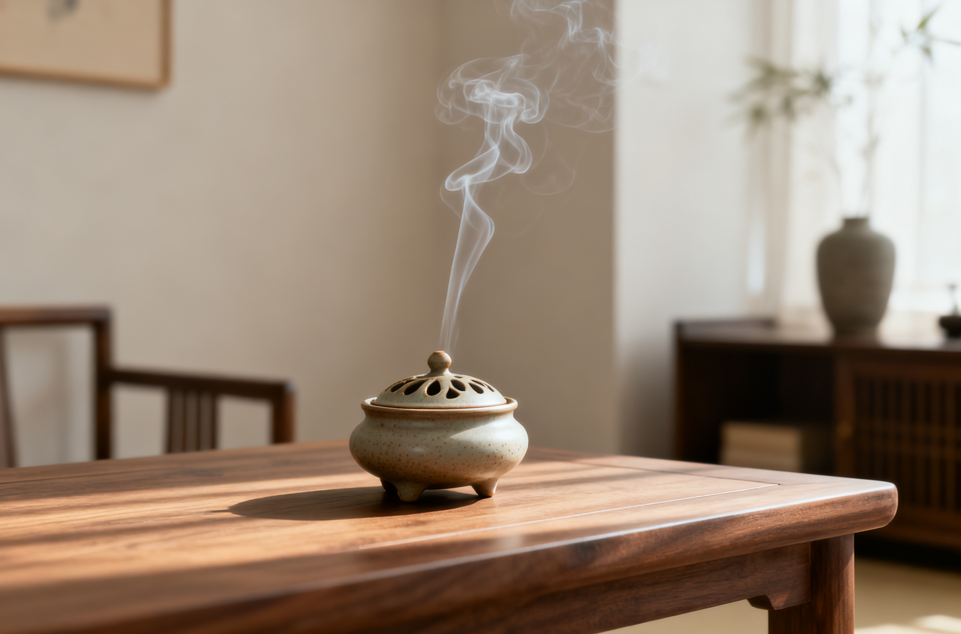
Beyond incense making, sandalwood holds profound cultural and spiritual significance. Its tranquil, restrained and sacred aroma helps soothe restless moods, calm inner thoughts and create a focused peaceful state, making it ideal for meditation and quiet relaxation. Both Buddhism and Taoism have long respected sandalwood as a sacred fragrant material.
In Buddhist scriptures, sandalwood is called dhan, which translates to joy, representing peace and inner comfort. Ancient Buddhist records mention that white sandalwood and red sandalwood help stabilize physical and mental comfort, hence the meaningful name of joy. Sandalwood is also an essential part of ancient royal solemn rituals, adding a dignified and peaceful atmosphere to important ceremonies.
Craft Carving Value: Precious Wood for Art and Decoration
Thanks to its fine dense texture, natural insect resistance and corrosion resistance, sandalwood has been loved by craftsmen since ancient times. It is widely carved into Buddha statues, prayer beads, art ornaments, sandalwood fans, jewelry boxes and walking sticks. The most famous treasure is the giant single-piece white sandalwood Buddha statue in Beijing Yonghe Lama Temple, standing 26 meters tall with a diameter of 3 meters, representing the top level of traditional sandalwood carving art.
Modern Application: Sandalwood Essential Oil and Daily Aromatherapy Use
Sandalwood essential oil refined from high-quality sandalwood is one of the most precious natural plant essences in the world. It acts as a key base fixative for high-end perfumes and custom aromas, and is widely used in daily skin care and home aromatherapy routines. With mild, gentle properties, sandalwood essential oil helps moisturize skin, ease everyday discomfort, and maintain a fresh, pleasant living atmosphere. To this day, it remains a favored natural aromatic material for modern home lifestyle, personal relaxation, and cozy indoor ambiance.